How a brand new competitive socialising venue in the heart of London added private karaoke rooms as a retention play, and started watching groups extend their nights by hours, one "just one more bottle of prosecco" at a time.
A new kind of local for the Square Mile
The Lucky Goat opened in late April 2026 on Bread Street, tucked between Bank and St Paul's in the heart of the City of London. It's the newest venue from the Miss Jones Group, built around a straightforward promise: history's best bar games, genuinely great cocktails, elevated food, and a private karaoke room when the night needs a second wind.
Across roughly 220 person capacity, the venue splits into two gaming zones, a fully stocked cocktail bar with a built in DJ booth, an outdoor area, an arcade nook, a photo booth, and, the reason we're here, two private karaoke rooms.
Why karaoke belonged here
For a venue built on tech darts, electric shuffleboard, pool and air hockey, karaoke wasn't an obvious first move. But the team describes the decision as a natural one:
"It's something that everybody loves. It's something you can have as part of a package or as an add on. It's quite easy to add on as an end of night experience."
The strategic layer is more interesting. The Lucky Goat gets a lot of after work corporate bookings that arrive around 5 or 6pm.
Karaoke became the answer, a private room, a private space that feels different from the main venue, and a reason to stay.
The two rooms
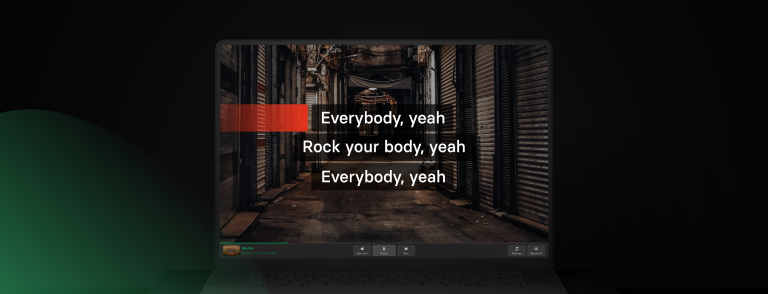
The Lucky Goat has two private karaoke rooms, both kitted out with Singa:
- Room 1, comfortably fits 14 people, up to 16 if you're friendly
- Room 2, same setup, slightly smaller
The rooms can be booked separately for smaller groups, or combined for larger parties. That flexibility matters for a venue that sees everything from date nights to corporate buyouts, bookings can scale from two people to venue wide takeovers of 220 without needing a different format.
The retention story: 2 hours to 6 hours
The single most striking pattern the team has noticed since opening:
"We've had groups that come in for a couple of hours and end up staying with us for about 6 hours. They'll add a quick 1 hour of karaoke, and then an hour is up and they go, okay, just add another hour then. Just go on. Just another hour. Another bottle of prosecco while you're there."
That's the mechanic. A group commits to one hour of karaoke as an experiment. They finish, they're having a good time, they extend. Every extension is another round of drinks, another dish from the kitchen, another song.
For a venue whose kitchen would otherwise be winding down by 9 or 10pm, karaoke bookings meaningfully extend how late food and drinks keep moving.
The F&B multiplier
Two things drive the food and beverage lift from karaoke at The Lucky Goat:
- Table service inside the rooms. Guests don't have to leave to get another round. They stay put, keep singing, and the drinks come to them.
- The psychology of a private space. As the team puts it: "It's your own private room, your own private space with your own private server. It's really nice." That premium feeling experience seems to correlate directly with people ordering more and staying longer.
The result is an unmistakable uplift in F&B sales, especially later into the evening, when the bar might otherwise be quieter.
Who's booking (and some genuine surprises)
The team was upfront that trend patterns are still early, the venue has only been open a few months, but a few things stand out:
- Corporates are the most consistent bookers, particularly after work groups
- Hen parties, expected
- Stag dos, less expected, but surprisingly popular
- A booking of just two people for two hours, a couple serenading each other, which is now on record as one of the more memorable bookings
- Weekend birthday groups, typically smaller (around 8 people) rather than massive 50 to 60 person parties
The demographic spread is genuinely wide. As the team said:
"I'd like to say there's a clear demographic or age bracket, but actually it seems to span quite vast. Which is great, it doesn't alienate anyone."
The corporate surprise
One anecdote worth pulling out:
"You don't always know how it's going to go with corporates. However, seeing plenty of CEOs having a little sing song, dancing like Cher, so why not? Clearly it's going down well."
And a second one, equally telling:
"I wouldn't have always expected a group of 12 lads to be like, should we jump on the microphone and get on stage and sing Cher? That's pleasantly surprised me."
The takeaway for other operators: the audience for karaoke is broader than the stereotypes suggest. Book it, and the CEOs and the lads' groups will both find their way to the mic.
City location, city rhythms
Being in the Square Mile creates its own patterns. Weekdays are dominated by after work corporate crowds from around 5 to 6pm through to 8 to 9pm. Weekends are what the team calls "a bit of a weird one", the City can be a ghost town or absolutely rammed with no obvious pattern, but when weekend crowds come in, they tend to be smaller celebratory groups (birthdays, small parties) rather than the big weeknight corporate buyouts.
Karaoke plays differently in each rhythm. On weekdays, it's the retention lever that turns a 2 hour after work drink into a full evening. On weekends, it's the birthday group centrepiece that drives the booking in the first place.
Why Singa
The Lucky Goat chose Singa for reasons that came up repeatedly across the interview:
- Reputation in the industry, well respected, widely used by fellow competitive socialising venues
- Reliability, "we've been running for a few months with it now. Never had a single issue"
- Ease of setup, the platform was straightforward to get up and running
- Ease of use for staff, a familiar interface that the team could pick up quickly
- The peer endorsement, hearing great things from competitors who use it made the decision feel natural
The team's summary:
"Super reliable, super effective, really fun, and helps to sell lots of drinks."
The takeaway
The Lucky Goat's karaoke story is a case study in strategic add ons. This isn't a venue that needed karaoke to have an identity, the competitive socialising concept was already the draw. Karaoke was added because it solved a specific business problem: how do you keep after work groups in the building past the 8pm dropoff?
The answer, quantified in the venue's early months:
- Groups extending stays from 2 hours to 6 hours
- F&B sales extending later into the evening than kitchen close would otherwise allow
- A surprisingly broad audience, including demographics the team didn't expect to convert
For any venue with a strong core offering that sees natural dropoff points in the evening, private karaoke rooms are worth looking at as a retention layer, not a replacement for the main experience, but a way to add hours (and revenue) to the ones you already have.
As The Lucky Goat's team put it, unprompted:
"It definitely, 100%, is keeping people in the venue for longer. Without a doubt."
More Singa case studies
- How Molly Mc's built a singing pub in Waterloo: three private rooms, an Irish grandmother's name over the door, and tripled room + drink sales in under a year.
- From storage closet to $80K revenue stream: how RollHouse Solon reimagined an unused space into a karaoke room for a $15K buildout.
- How RollHouse Mentor set up self-service karaoke in their Bomb Bar.
- Culver Karaoke: how two UCLA grads opened L.A.'s westside karaoke spot in five months.
Not sure which karaoke setup fits your venue? Read our guide on choosing the best karaoke system for your venue.
Thinking about adding karaoke rooms to your venue? Get in touch with Singa for Business to see how it could work in your space.