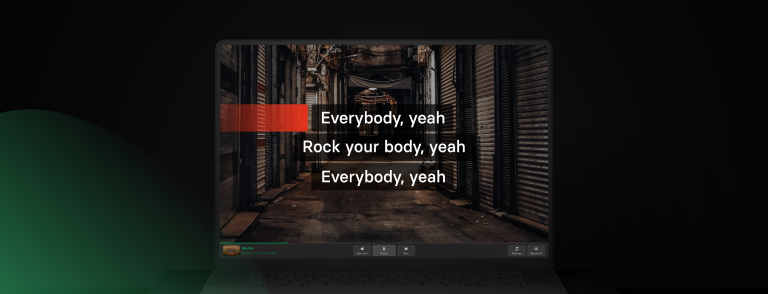
How two UCLA grads went from Uber-ing to K-Town every weekend to opening one of only two private-room karaoke spots on L.A.'s west side in five months, with Singa as their karaoke system.
We spoke with Mathew and RJ, co-founders of Culver Karaoke, about what it took to turn a leased Culver City storefront into an eight-room private karaoke destination and why they've become one of Singa's most enthusiastic advocates in the U.S.
The Culver Karaoke story
Mathew and RJ met at UCLA. Like a lot of L.A. college students who wanted to sing, their only real option was Koreatown — a 45-minute Uber each way, always walk-in only, and tablets that were often barely functional in English.
"A big problem with going from UCLA to K-Town is that you've got to wait for these Ubers. You get there, and they're all walk-in. A lot of the tablets themselves are not that user-friendly. Those places were nice — and they're still running on the other side of the freeway — but we thought we could do it better."
RJ graduated a year before Mathew. Mathew locked in a lease on a Culver City space and, one day, made the call: "Let's open a karaoke spot." That was January 2024. Culver Karaoke opened five months later.
The venue: eight rooms, three sizes
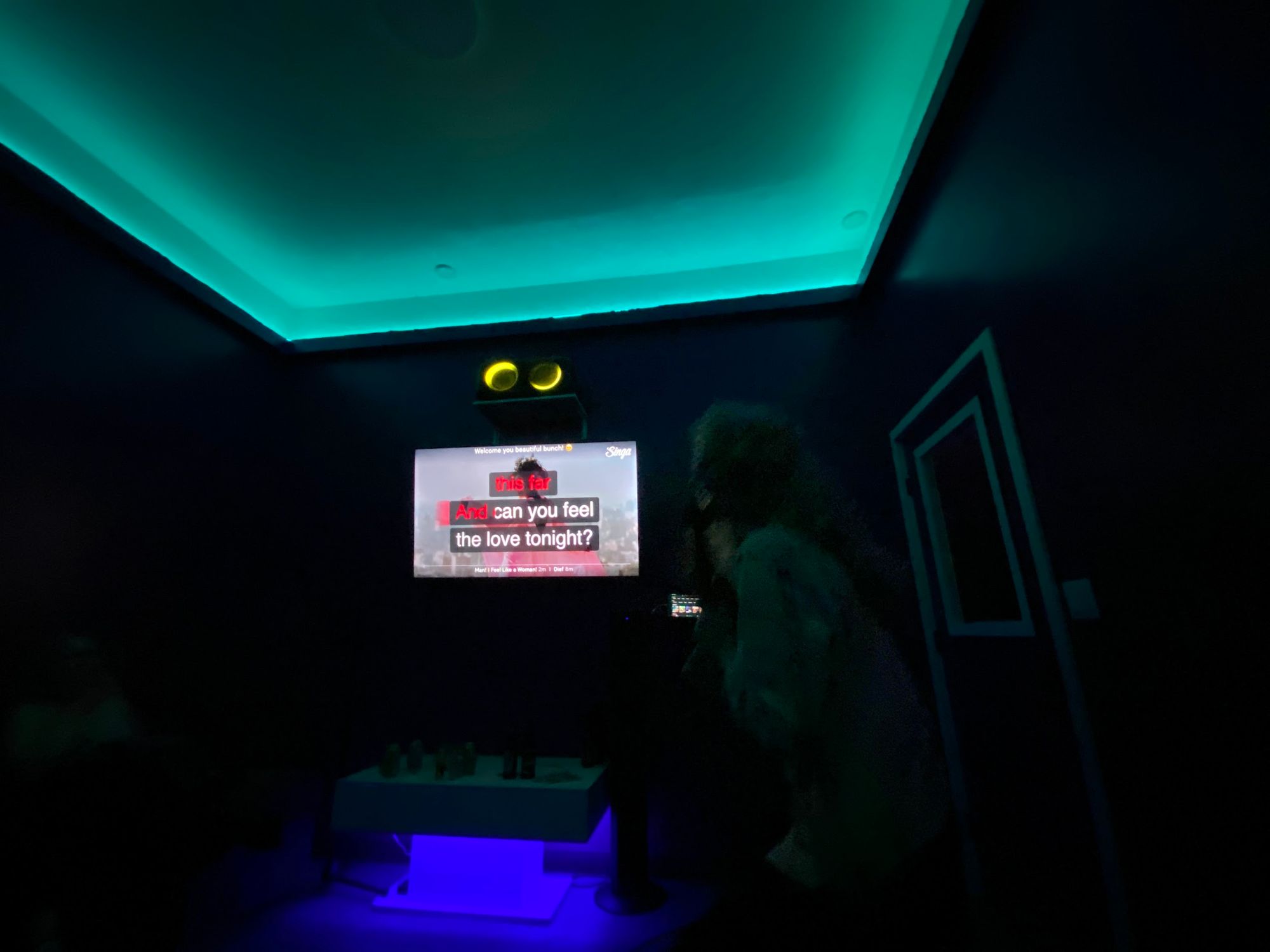
Culver Karaoke has eight private rooms split across three sizes — small, medium, and large. A medium room fits seven to eight adults comfortably and is set up with:
- A 55-inch flat-screen TV
- A dedicated sound system
- Four wireless microphones
- An iPad running Singa for song selection, queue management and remote time top-ups
Design-wise, the space leans on a wall of iconic album covers as the opening statement — a visual cue that Culver Karaoke isn't a single-genre venue.
"The whole point was for people to come in and think, 'Oh, it's not just one type of music you can listen to here — you can listen to all these albums we love.' The goal is to have that lined up and down the halls."
Why Singa
Mathew and RJ reached out to a handful of karaoke software providers when they were scoping out equipment. Singa was the only one that sent a rep to meet them in person — Jonah, based right in the Los Angeles area.
"By the time he showed us the software, it was just so good that there was no reason to go anywhere else."
What tipped it wasn't just the product. Jonah offered up hard-won operational advice built from working with dozens of other karaoke venues — the kind of thing a first-time operator can't buy.
"We didn't know what systems to use, what software, what mics, what equipment, or how to set up the stereo. He was just like, 'Guys, I've got a guy for you. I know what you should do. I've seen this, I've seen that.' I don't think we would have been able to do it as easily without that."
From idea to opening: five months
The plan was Memorial Day weekend. Reality landed a few weeks later, in June. Building out a karaoke venue from scratch turned out to involve more moving parts than either founder expected — but the timeline still beat what most first-time operators pull off.
"There was a lot of work, but thankfully, with a lot of help — including Singa themselves — we got through it, and now we're here."
The biggest challenge: making choices
Ask most first-time operators what the hardest part was and they'll tell you construction, or permits, or hiring. For Mathew, it was something more philosophical: understanding that eight rooms means eight decisions per night about who gets what.
"We want to provide an immersive experience for every single party. But at the end of the day, you have to make choices. Culver Karaoke doesn't have 20 rooms — we have eight. And we want to provide everybody with a fun, memorable, and somewhat exhilarating experience here."
U.S.-based support that actually shows up
The support relationship with Singa's U.S. team has been a genuine differentiator for the Culver Karaoke team. Their rep isn't in another time zone — he's in the same zip code.
"He can come at any point whenever we need him on the fly. So in terms of U.S. support, it's great. I love having it."
Who's booking Culver Karaoke
The audience skews wide — much wider than the K-Town demographic that inspired the founders.
- Couples on dates in the small rooms
- Groups of two friends reconnecting
- Fraternities, sororities and other UCLA student organizations booking the large rooms
- Family groups, work outings, and birthday parties of 15+
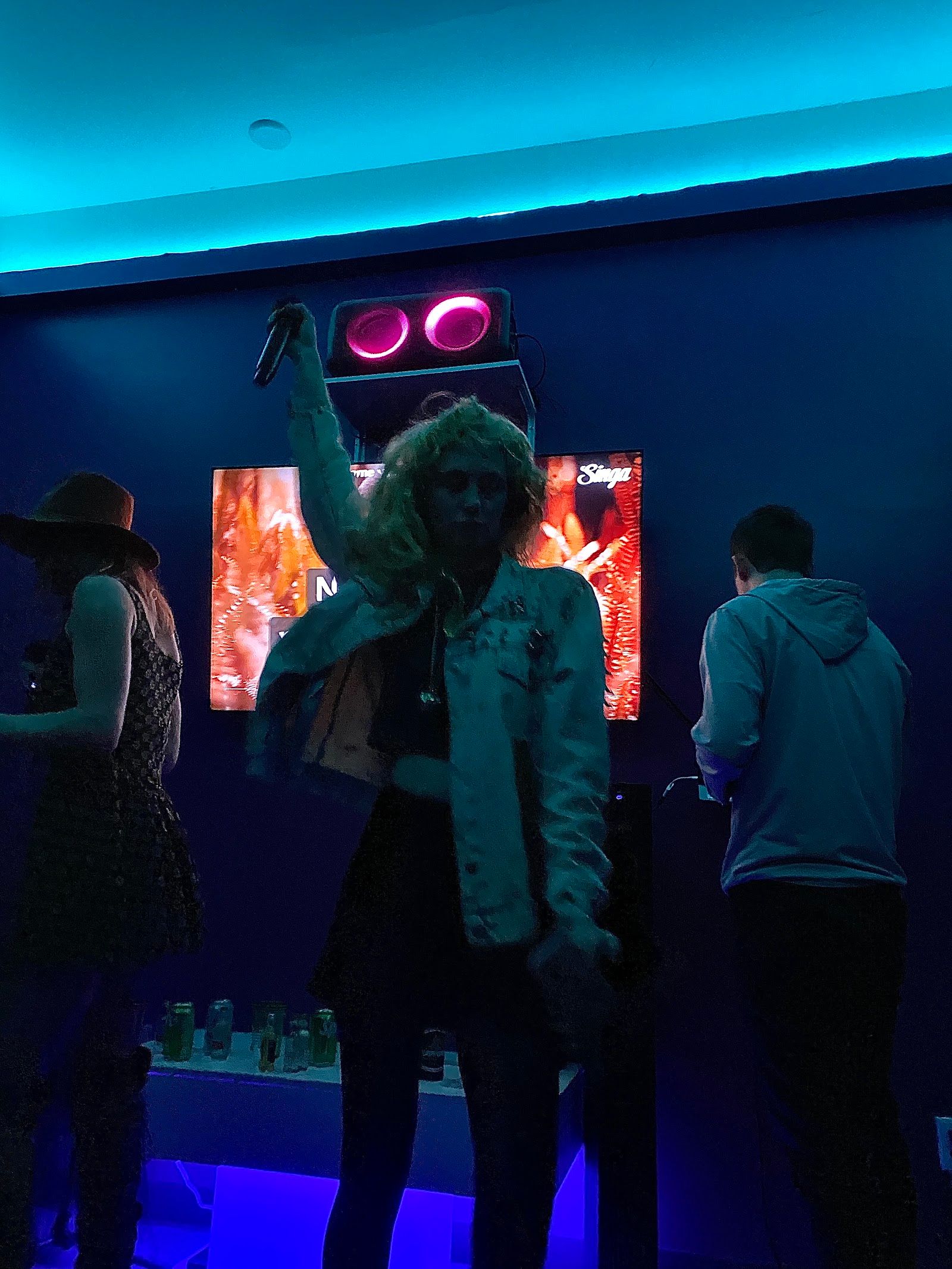
"Anybody who wants to sing can come. Music is universal. The people who come here are people who want to have a good time."
Reservations run through Instagram DMs, email, and phone — no walk-in wait if the calendar allows. That reservation-first model is one of the deliberate differences from the K-Town competition.
What's worked in marketing
Culver Karaoke opened five months before the January 2025 L.A. fires — a stretch that would have crushed any hospitality launch. The team leaned into channels they could control:
- UCLA outreach. Both founders are alumni. Going back to campus and pushing directly to student organizations paid off in the early months.
- Instagram-first. Ads and organic content on @culverkaraoke drive most of the online-discovery bookings.
- The Thursday student promotion. 50% off for college students on Thursdays during spring quarter. It performed well enough that the team is bringing it back for fall.
- Word of mouth from the neighborhood. Culver City locals walking by, talking to neighbors, generating referral traffic organically.
"The best part was customer service. People walking up and down the street, and neighbors, were really happy to give us word of mouth."
Favorite Singa features
When we asked what specifically about Singa made the difference from an operator perspective, three things kept coming up:
- Multi-language support out of the box. The iPads let any guest switch languages and find songs in whatever language they want — a direct response to the K-Town frustration of "the keyboard is only in Korean."
- The queue timer. The countdown showing time remaining in the session lets guests plan their last song and end the night on a high note instead of getting cut off mid-verse.
- Remote time top-ups. Staff can add time to a room without walking in, so parties don't get interrupted.
"I haven't used a more user-friendly interface. It's universal, there are so many different languages on it, and it's so easy to navigate and find what you're looking for."
What guests are saying
The single most-repeated compliment isn't about the drinks or the decor — it's about the software itself.
"A good number of people have come in and said, 'Wow, your software is so easy to use.' I think it's the same experience I had that made me fall in love with it, and I think everyone else has had that experience too."
What's next for Culver Karaoke
The physical build is version one. Mathew and RJ have a list.
- Expanding the album-cover wall from the entrance down the hallways
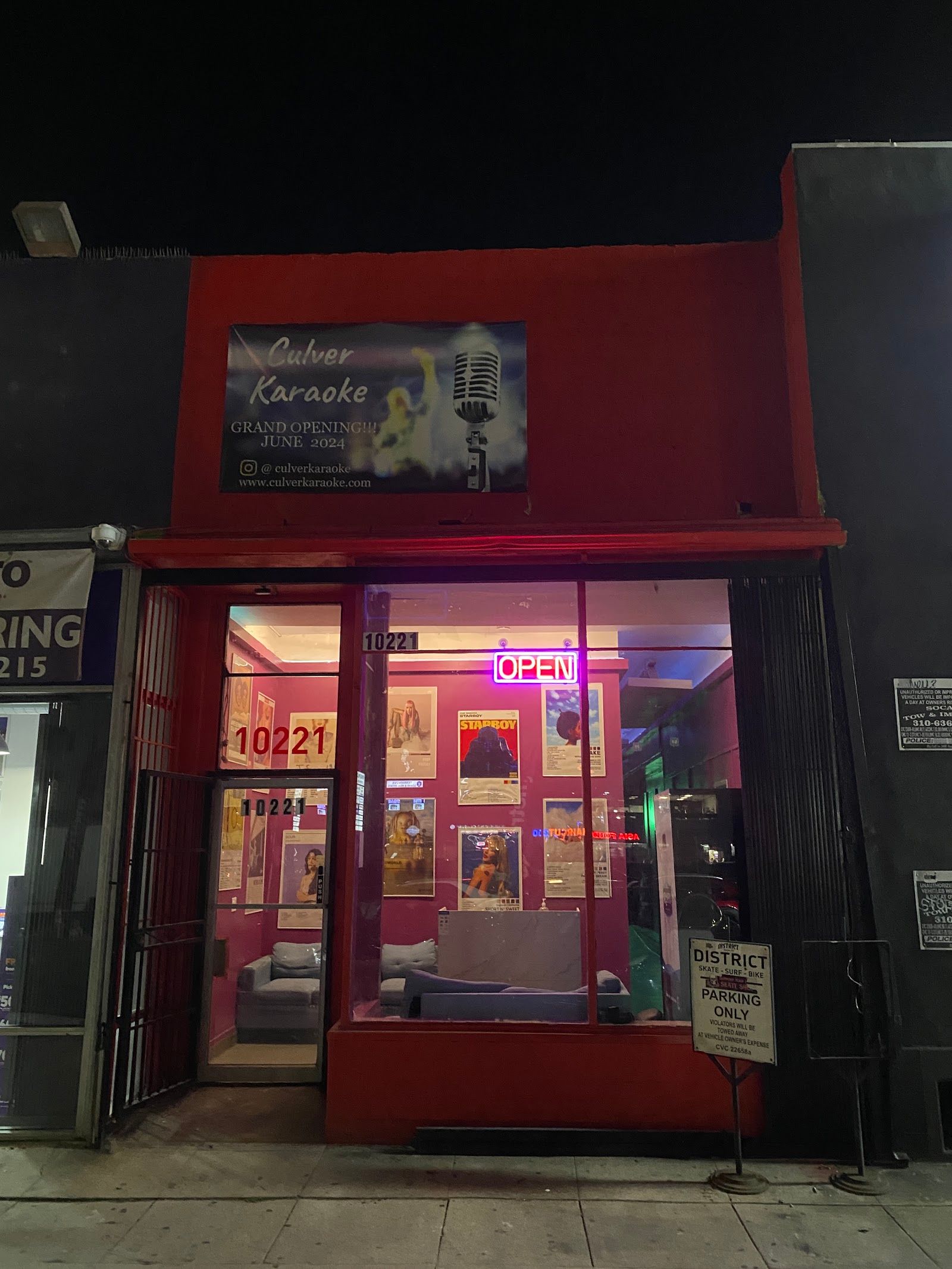
- A new exterior sign to replace the temporary poster out front
- Bringing back the Thursday 50%-off college promo for fall quarter
- More decor across the room fronts — the venue is still less than a year old
The recommendation
We asked Mathew directly whether he'd recommend Singa to another karaoke operator. His answer:
"I would 100% recommend Singa. I would love to keep it for ourselves, but if someone were going to open a karaoke spot, I would say Singa is amazing — not just because of how easy it is for us to use, but also because of how much customers love it. I would 1,000% recommend Singa to other people."
If you're in Los Angeles, Culver Karaoke is open at 10221 Culver Blvd. Follow @culverkaraoke on Instagram for the latest hours and promotions.
For operators thinking about adding karaoke rooms to their venue, the Culver Karaoke story is a five-month reminder that the right software and the right on-the-ground support can compress a long timeline into something workable — even for two first-time founders straight out of college.