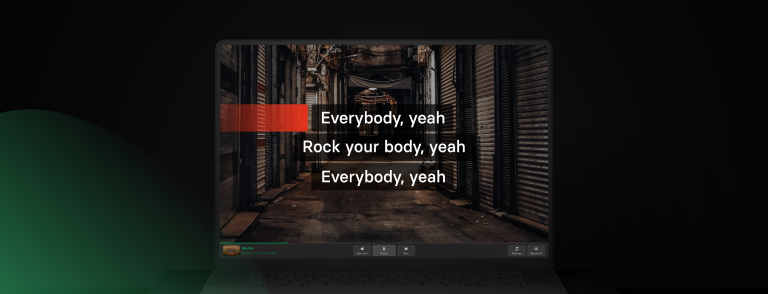
How Gothenburg's Sångfågeln is building a new karaoke venue a decade after Sing Sing — this time with ten years of operational experience, a mature karaoke market, and a much more developed technology platform behind it.
When Sebastian and a group of friends opened Sing Sing in Gothenburg, they were among the first to bring the private-room karaoke concept to Sweden. Nearly a decade later, Sebastian has returned to karaoke with Sångfågeln — "Songbird" — a new venue in Gothenburg. This time, he is entering a very different market.
Karaoke is no longer a novelty, customers know what to expect, and the technology behind running a venue has evolved significantly. That experience has shaped everything from the layout of the karaoke rooms to how Sångfågeln markets itself and thinks about long-term growth.
"When we opened Sing Sing, it was the next big thing, and everybody was super excited and interested in it. Now karaoke's been around for like 10 years here, so you don't have that newsworthiness to it."
Creating two experiences under one roof
When the opportunity arose to take over a familiar space in Gothenburg, karaoke felt like a natural part of the concept. The location had previously operated as a karaoke venue, meaning some of the rooms and technical infrastructure were already in place. But rather than simply reopening the same concept, Sebastian and the team wanted to create something different.
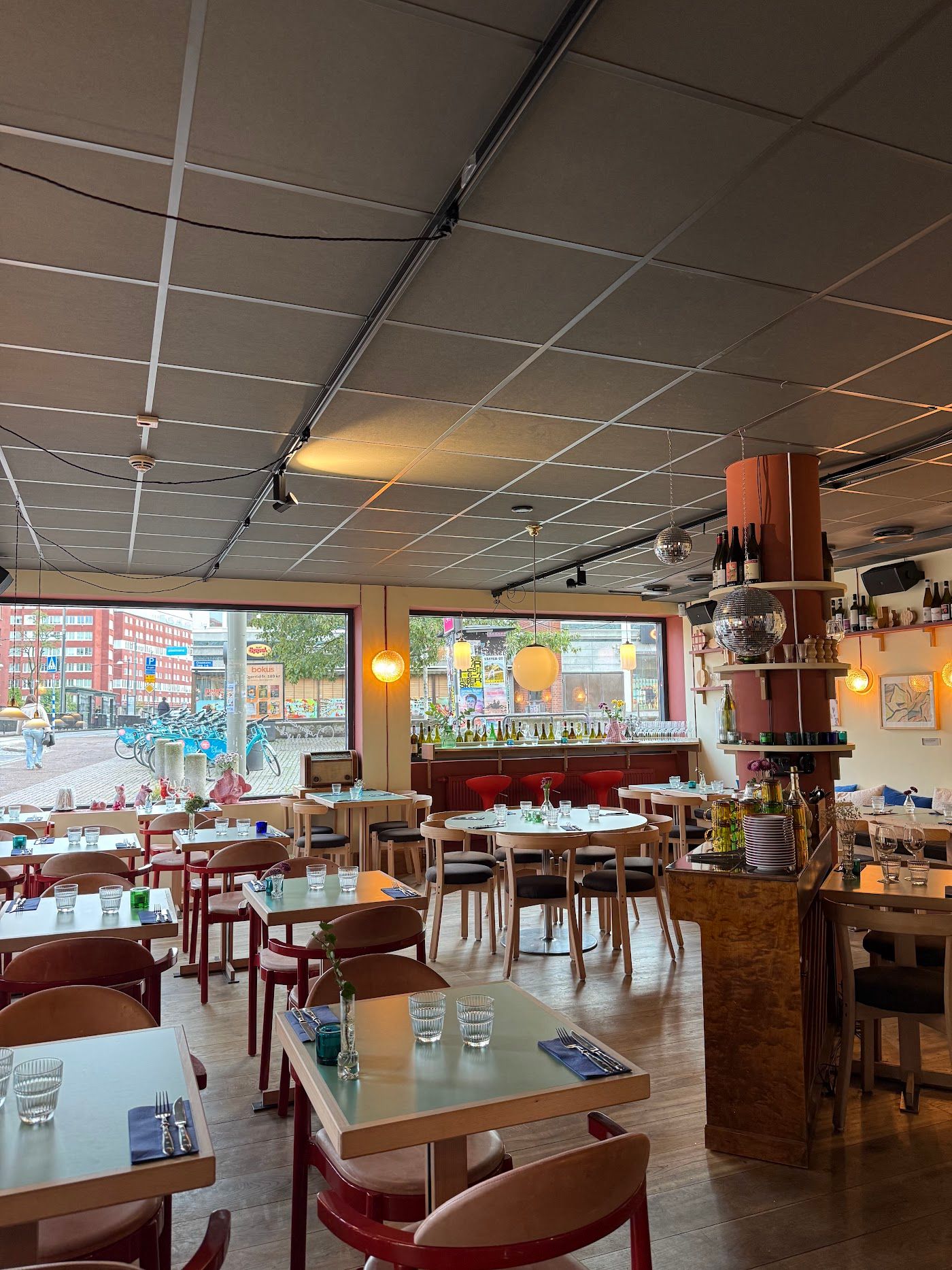
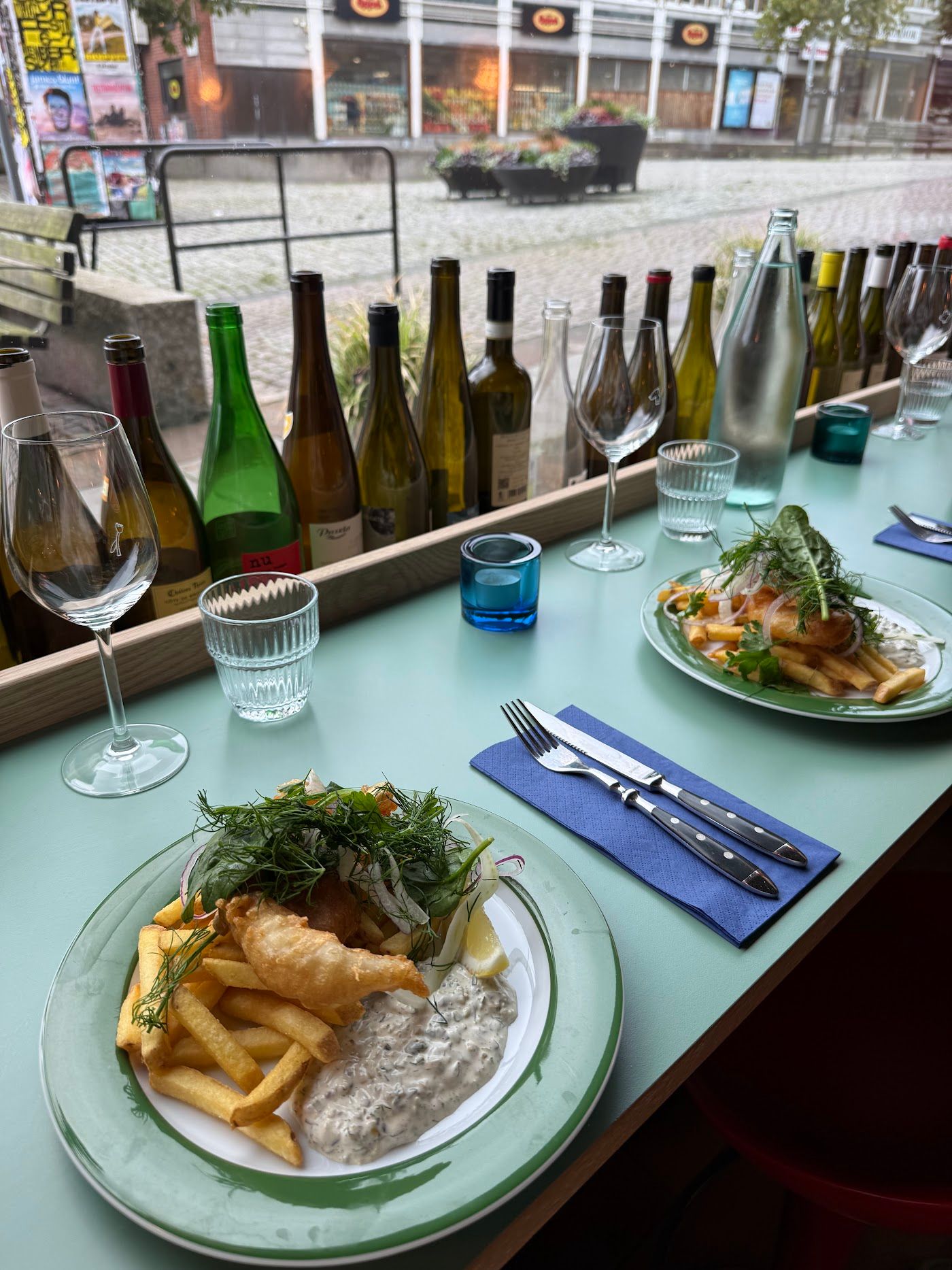
They divided the venue into two distinct businesses, each with its own entrance. One side became a casual fine dining restaurant focused heavily on wine. The other became Sångfågeln, a dedicated private karaoke experience.
"We wanted to do something different, so we divided up the space in two and made one part with its own entrance, a casual fine dining restaurant, a lot of wines."
The team also worked with local artists to decorate the karaoke area, giving the rooms their own identity rather than treating karaoke as simply an add-on to the restaurant. For Sebastian, karaoke was part of the plan from day one.
What changes when you've already built a karaoke venue?
Opening a karaoke venue for the second time gave Sebastian one major advantage: experience.
When Sing Sing originally opened, nearly everything had to be figured out for the first time — from technical installations to room layouts and the position of song-selection screens. There was little established knowledge to work from. Six or seven years of operating the original venue helped turn those lessons into instinct.
This time, many of the operational decisions were already clear. The differences are often small, but they matter. Where should guests select songs? Where should electrical equipment sit? How should rooms be arranged to make the experience intuitive?
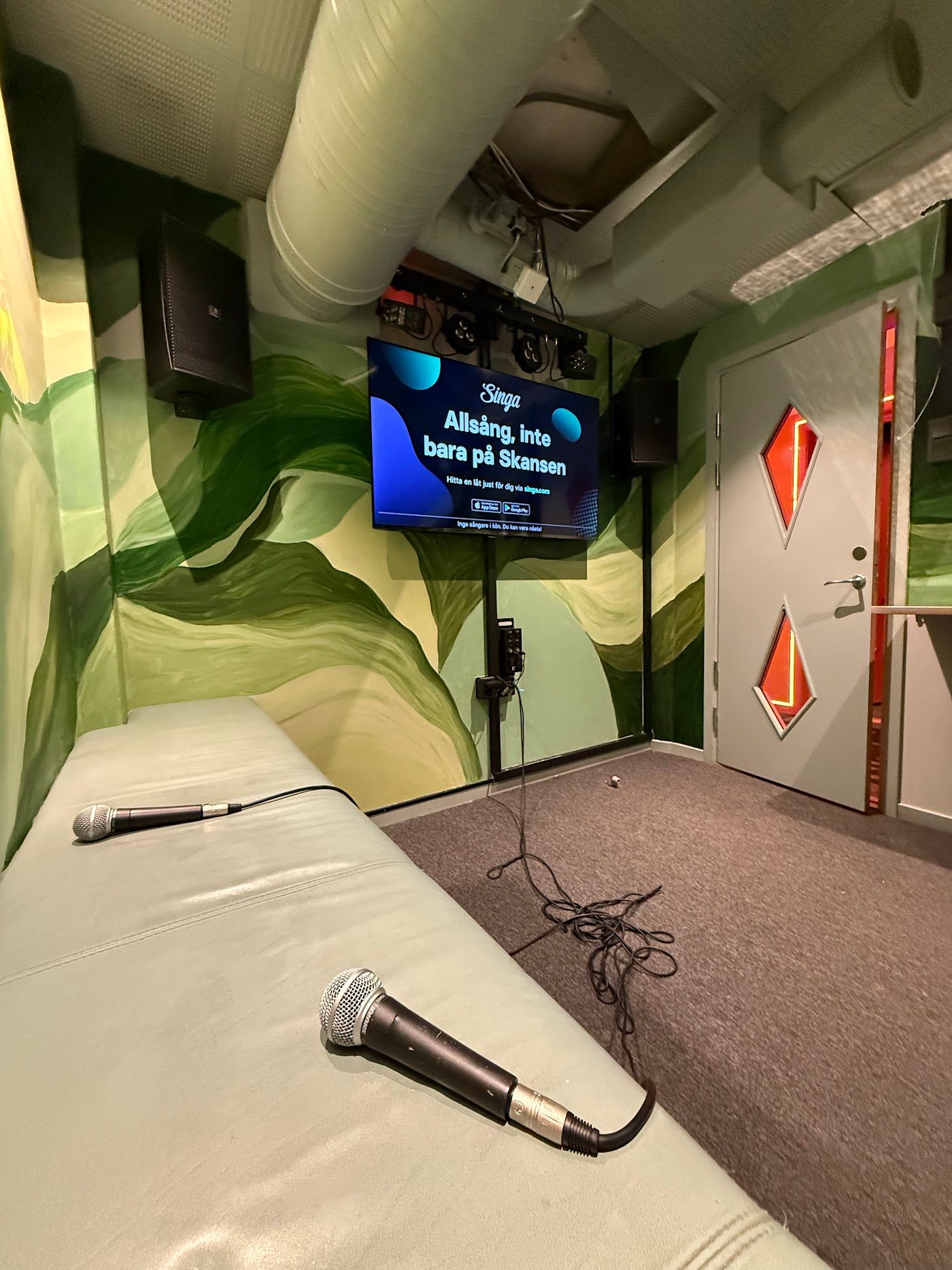
Having already worked through those questions allowed the team to concentrate more on the experience itself. One area Sångfågeln is exploring more heavily is open-room karaoke events. Instead of keeping every room private, the venue can occasionally open up the experience, creating larger karaoke parties that help fill the space and introduce new people to the venue.
"It's a good way to fill up the space and to get a really fun night for everybody and to market the place."
Sebastian sees the open-mic element as another layer of the experience alongside traditional private karaoke rooms.
From being first to building something that lasts
Experience makes some parts of opening a venue easier, but Sebastian says the market itself is more challenging this time around.
When Sing Sing launched, private karaoke was new enough in Gothenburg to generate attention simply because it existed. That advantage has disappeared.
"When we opened Sing Sing, it was the next big thing. Everybody was super excited and interested in it."
Today, Gothenburg has an established karaoke culture and multiple places where guests can sing. Instead of relying on novelty, Sångfågeln has to gradually build a customer base and give people a reason to choose its experience. Sebastian describes the difference as a boom versus a slower build.
"This is a slow-built progress. When we opened the first place, it was just like a boom. But I believe that when we build it this way, it will last. The foundation will be stronger, I believe."
It is a useful lesson for operators entering more established experiential entertainment markets. Being the first can create immediate attention, but a mature market demands a stronger concept, consistent marketing and patience.
Karaoke as a destination, not an afterthought
Although Sångfågeln shares a location with a restaurant, the karaoke side largely operates as its own experience. According to Sebastian, guests generally come specifically to sing karaoke, rather than discovering it after dinner.
The audience is also broad. Sångfågeln welcomes everyone from children to pensioners, although Sebastian says the core audience currently sits around 25 to 45 years old, with a relatively even mix of men and women. That makes the rooms useful for a wide range of occasions, from nights out with friends to children's parties and company events.
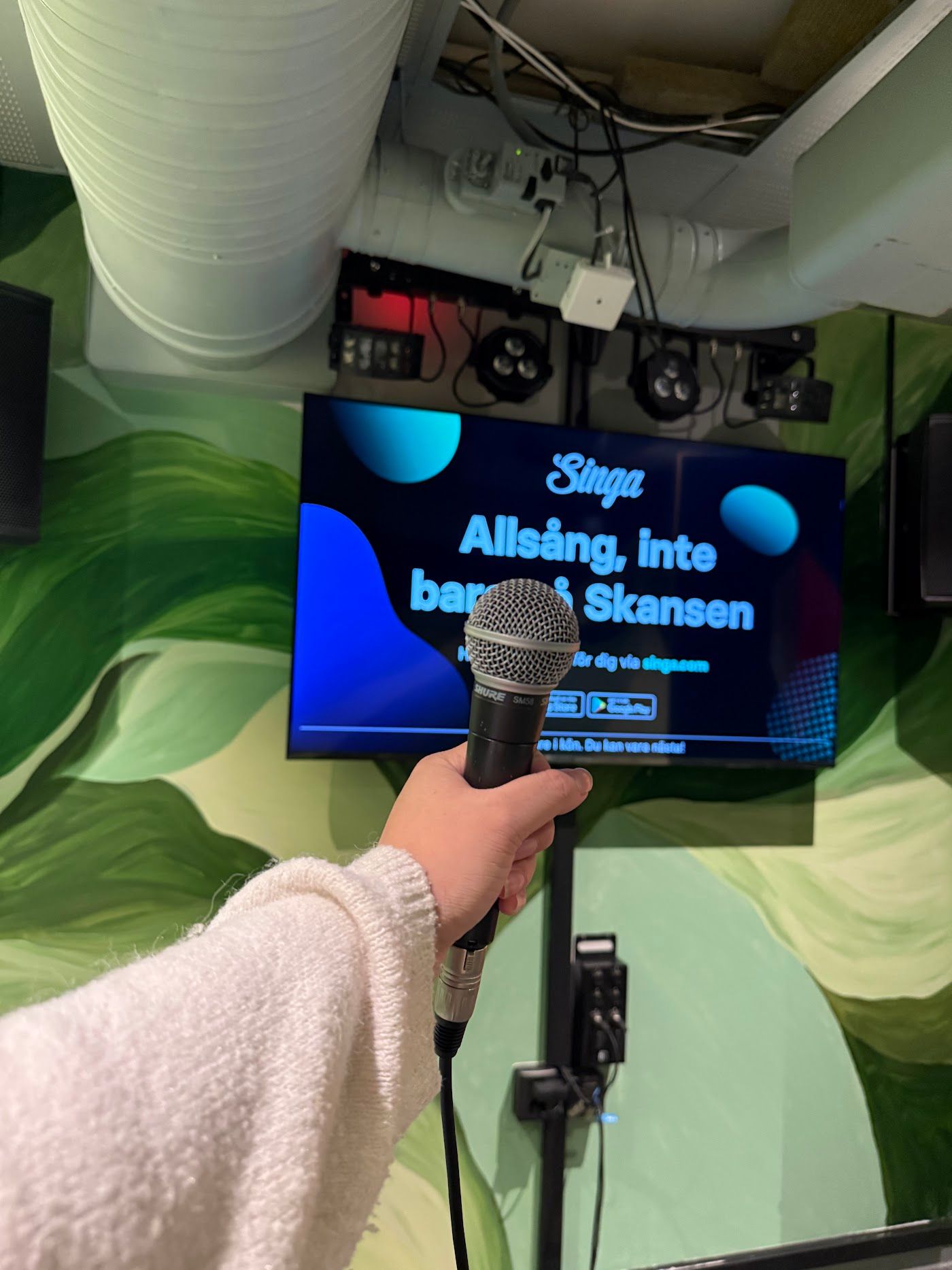
Sebastian sees corporate bookings in particular as one opportunity to use karaoke rooms earlier in the day, rather than depending entirely on peak evening hours. The restaurant also creates opportunities for crossover — guests can have dinner and drinks before moving into a karaoke session, building multiple experiences into the same visit.
Giving guests a reason to stay longer
Combining food, drinks and karaoke naturally extends the amount of time guests spend at the venue. A restaurant visit might last a couple of hours. Add a 90-minute or two-hour karaoke session afterwards, and that visit becomes substantially longer.
"If they eat and drink and then also go down for an hour-and-a-half, two-hour session of karaoke, they spend more time here."
Karaoke also works naturally alongside beverage sales. Rather than asking guests to leave after dinner and find their next activity somewhere else, Sångfågeln can keep the group together and give them another experience within the venue.
For hospitality operators, that is one of the key advantages of adding experiential entertainment. Karaoke creates another reason for guests to stay, socialize and continue spending within the same venue — a pattern we've also seen play out at venues like Molly Mc's in London and The Lucky Goat.
Marketing karaoke in a more competitive market
With karaoke already well established in Gothenburg, Sångfågeln cannot depend entirely on the concept selling itself. Sebastian's approach to marketing is highly experimental.
The team creates short-form videos featuring staff, follows relevant TikTok and social media trends, develops themed events, quizzes and game nights, and tests different ideas to see what resonates.
"You just try all different types of things. You throw it at the wall and you see what sticks."
Rather than waiting for the perfect campaign, the approach is to continuously create reasons for people to discover and talk about the venue. Timing also matters. Sångfågeln's restaurant opened first, with the karaoke space following roughly three months later. That launch also came just before summer, which Sebastian describes as a quieter period for karaoke. With autumn and winter approaching, the team plans to put significantly more attention into promoting the karaoke side of the business.
Returning to Singa 10 years later
When choosing the karaoke platform for Sångfågeln, Sebastian says the team did not spend much time considering alternatives. Having already worked with Singa during his previous karaoke venture, returning to the platform was an easy decision.
"Singa is dominant in the market here and has a very well-functioning service."
But the Singa Sebastian uses today is very different from the platform he worked with when opening Sing Sing. During those early years, venue operators like Sebastian worked closely with Singa's team, suggesting features and sharing feedback from guests as the platform developed. Ten years later, he describes Singa as a significantly more complete product.
"It's a much more complete product, I would say. And it's very user-friendly."
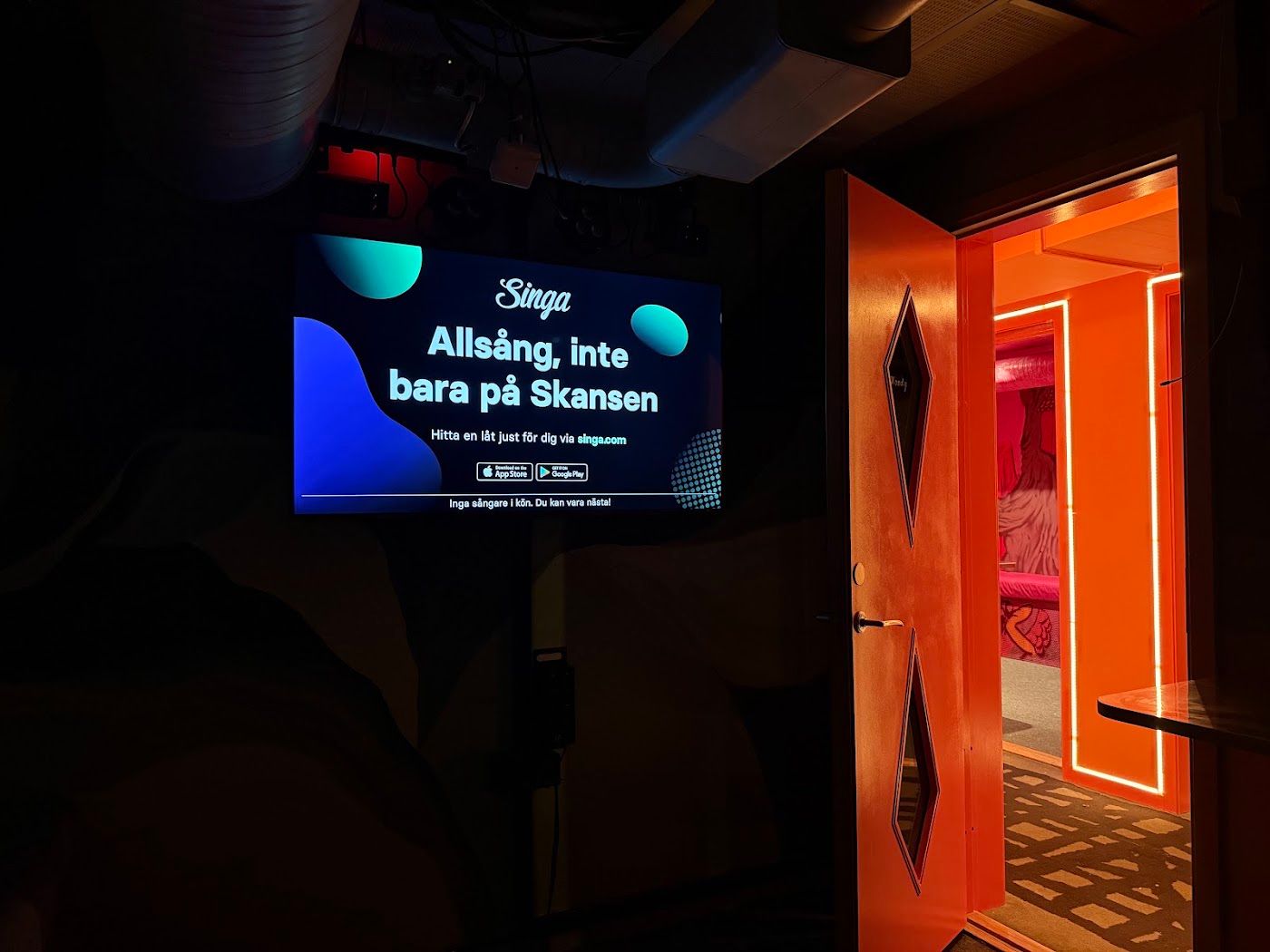
That ease of use is particularly important inside a private karaoke room. Guests need to be able to enter the room, understand the system and start singing without staff spending significant time explaining the technology.
Sebastian says customers can generally be shown the interface and intuitively understand how to find and select songs. For a busy venue, reducing that operational friction means teams can focus more on hospitality and less on troubleshooting technology.
Singa Business is designed for professional karaoke venues, bars and entertainment businesses, combining a licensed karaoke catalogue with tools built specifically for commercial karaoke operations.
Building for the long term
For Sebastian, opening a second karaoke business has also been a reminder that previous success does not make the next venue effortless. He admits he had hoped some of the momentum from his first venture might repeat itself immediately.
"I was hoping for immediate success again and just to lean back. So I wasn't expecting it to be this much work."
Instead, Sångfågeln is being built one step at a time. That experience shapes Sebastian's advice to other operators considering karaoke.
First, understand your local market. Are there already karaoke venues nearby? How large is the potential customer base? If competitors exist, what will make your concept different? Then comes the harder part: persistence.
"Such a big part of it is just to persevere, to do one thing after the other. Take the highs when you get them and take the lows on your chin and just keep on moving forward."
It is a perspective informed by more than a decade of experience in karaoke. Concepts change. Technology improves. Competition increases. And sometimes growth comes more gradually than expected. But Sebastian believes operators who learn from each challenge and continue developing their concept can build something stronger as a result.
"It will be hard no matter what. But if you're able to learn from those experiences, not spend too much time on the negatives and just focus on the positives."
Sångfågeln may not have the novelty advantage that Sing Sing enjoyed 10 years ago, but it has something the original venue did not: years of experience, a mature karaoke market, and a much more developed technology platform behind it. And for Sebastian, that could make the foundation stronger this time around.
Want to bring private-room karaoke to your venue? Learn more about Singa Business and how Singa helps hospitality and entertainment businesses build professional karaoke experiences — or read our Singa Pro overview for a walkthrough of the system Sångfågeln uses.