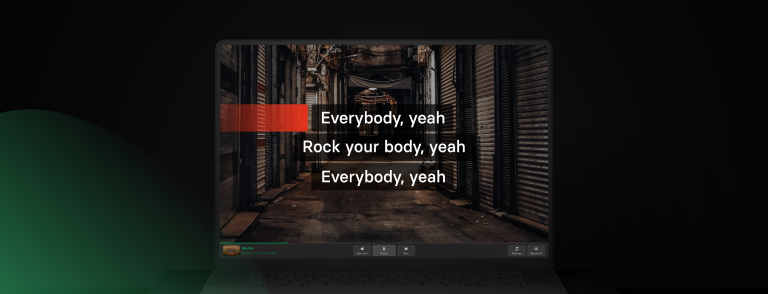
Silence is awkward. Anyone who has hosted or managed a live entertainment space knows the feeling: a song ends, the crowd waits, and suddenly the energy in the room drops. Background music is one of the simplest tools available to prevent that from happening, and the research confirms it. According to a study by Broadcast Music Inc. and National Research Group, 80% of consumers say they would stay longer in an establishment if the right music was playing.
For karaoke venues specifically, background music has traditionally meant a separate system, a separate subscription, and a lot of manual switching. Singa's integration with Soundtrack changes that.
Instead of juggling multiple systems for karaoke and music playback, you can run everything from one place — saving time, reducing complexity, and improving the overall guest experience.
Why background music matters more than you might think
The relationship between music and customer behavior has been studied for decades, and the findings point consistently in the same direction. Ronald Milliman's 1982 supermarket study found that slow-tempo music slowed in-store traffic flow and led to higher sales volume compared to fast-tempo music. A more recent retail study published in the Journal of Retailing and Consumer Services confirmed that consumers in a music condition spent both more money and more time in the store. In 2021, A separate field experiment in restaurants found that music tempo directly influenced how long diners stayed at their tables. The pattern holds across industries: the right music keeps people in the room longer.
In a karaoke setting, the stakes are even higher. You are already asking guests to be vulnerable, to get up and perform in front of others. The atmosphere you create around those moments matters. Dead air between songs, awkward pauses while someone queues up the next track, or a room that feels flat when nobody is singing. These are all moments where background music does meaningful work.
Background music helps to:
- Maintain a consistent atmosphere
- Smooth transitions between singers
- Keep energy levels steady
- Create a more professional, polished experience
For karaoke venues, this translates directly into better engagement and potentially higher revenue. The question isn't really whether to use it. It's about knowing when and making sure the setup doesn't create more work for you.

When to use background music in hosted karaoke
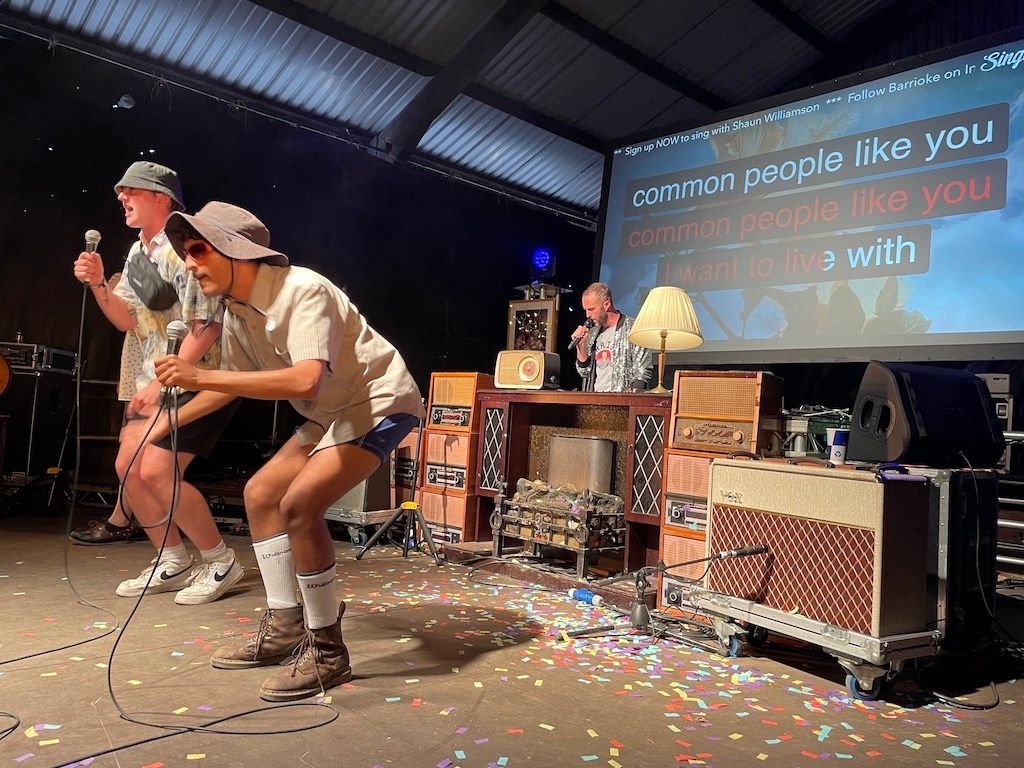
If you run hosted karaoke with a KJ (karaoke jockey), background music is your best tool for keeping energy consistent throughout the night and helps to control the flow of the night.
Between songs
Between songs, while the KJ is taking requests, pulling up the next track, or giving a quick introduction, silence can kill momentum. A well-chosen playlist running underneath those transitions keeps the room feeling alive. Guests stay engaged. The atmosphere doesn't deflate every time it’s time to hand off the mic.
During technical delays or transitions
Whether you’re queuing the next singer or resolving a small issue, background music ensures the room never goes quiet.
Setting the tone early in the night
Before the first performances begin, background music helps establish the vibe. You can guide the mood of the evening: whether relaxed, upbeat, or party-focused.
Keeping engagement high
It also takes extra pressure off the KJ. When there’s a longer gap in participation, music keeps people entertained and more likely to stay engaged instead of drifting away. Instead of rushing to fill every gap, the host can take a beat, interact with the crowd, and let the music do the atmospheric work.
The key is choosing music that complements the energy of the night without competing with it. Upbeat but not overwhelming. Present but not distracting. With Soundtrack's 2,000+ curated playlists available directly inside Singa, finding the right fit takes seconds rather than a separate search across another platform.
When to use background music in self-service karaoke
Self-service karaoke venues face a specific challenge: not everyone is singing all the time. Groups take breaks. Guests order drinks, chat between songs, or take time to scroll through the catalogue. During those moments, the space needs to feel like somewhere worth being, not a room waiting to be used. Background music plays an even bigger role here.
When no one is singing
In self-service setups, there’s no host actively managing transitions. Background music ensures the space still feels lively when the system is idle.
It keeps the vibe going between performances and creates a consistent atmosphere whether five people are singing back-to-back or a group is taking a 20-minute break.
Creating a continuous experience
Guests can move naturally between singing and socializing without noticeable breaks in audio.
Reducing operational complexity
There's a practical angle for venue operators: with Singa and Soundtrack working together in one system, you no longer need to worry about switching between software for karaoke and quality background music. For self-service setups that are designed to run with minimal staff, this matters. Every manual task you eliminate is a small win, lowering staffing requirements and simplifying training.
Supporting a more relaxed environment
Not every guest wants to sing constantly. Background music makes the space enjoyable for those who prefer to listen, talk, or wait their turn.

When to use background music in karaoke rooms
Private karaoke rooms are built for non-stop singing, and most guests will want to keep it that way. Even so, there are specific moments in every session where background music earns its place.
When guests enter the room
The room should feel ready and inviting the moment guests walk in. Background music sets that tone immediately rather than leaving the space feeling empty while someone figures out how to get started.
Between sessions or breaks
Most groups will move quickly from one song to the next, but if you run any ads between tracks, or if there's a natural lull, background music keeps the atmosphere consistent and avoids sudden silence.
When guests leave
First impressions matter, but so do last ones. The end of a session is often chaotic: gathering belongings, settling bills, saying goodbyes. A room that still has music playing through that window sends guests out on a high rather than into silence.
Supporting ad placements
If your venue serves ads or promotional content between songs, background music helps maintain flow and prevents interruptions from feeling abrupt.
These touchpoints are small individually. Together, they shape how guests remember the experience and whether they want to come back.

The challenge: managing multiple systems
Traditionally, karaoke operators and venue managers have had to rely on separate systems:
- One for karaoke playback
- Another for background music
This setup creates several challenges:
- Manual switching between systems
- Increased risk of silence or technical errors
- More equipment and maintenance
- Higher staff workload
In busy environments, these small inefficiencies quickly add up. For businesses with several locations, the complexity multiplies across every venue.
One solution, less hassle
Singa’s integration with Soundtrack eliminates the need for separate systems. You can manage karaoke and background music seamlessly within the same ecosystem.
- Automatically play background music when no karaoke song is active
- Maintain continuous audio without manual intervention
- Simplify setup and daily operations
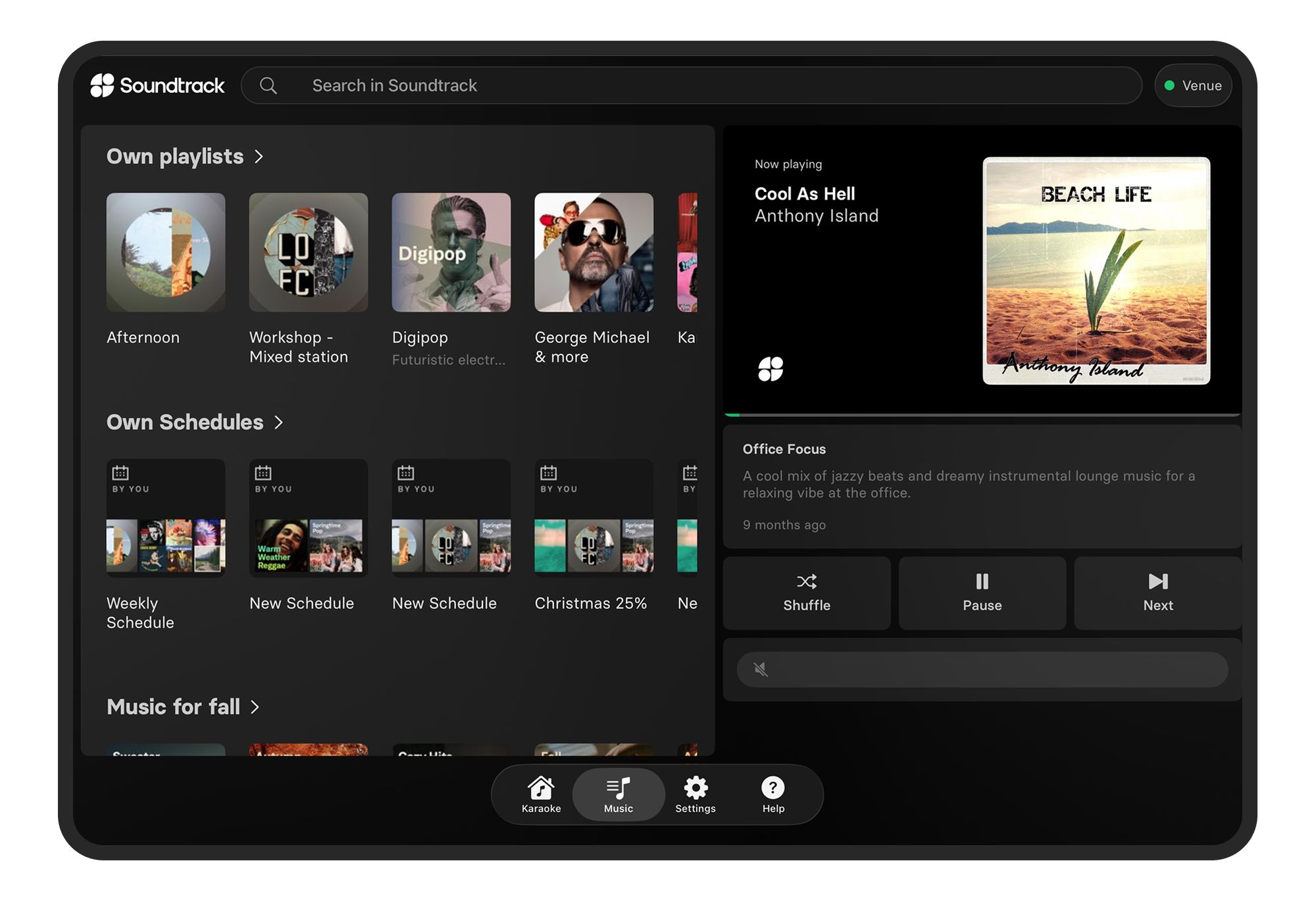
Soundtrack is available directly in Singa Business Pro and Box plans as a background music add-on, giving you access to over 2,000 curated playlists, updated weekly, with features including custom music scheduling, an explicit lyric filter, and a multi-location dashboard.
You manage it all from one place. When you want background music, you open Singa, go to Music, select Soundtrack, and choose your zone. There's no switching apps, no second login, no complicated routing between systems.
Operational benefits for business owners
Beyond the guest experience, the Singa and Soundtrack integration offers clear operational advantages.
Simplified setup
Running everything through one integrated system removes the need for complex audio configurations.
Reduced staff workload
Automation means fewer manual actions, allowing staff to focus on customer service rather than technical management.
Lower risk of errors
Fewer systems mean fewer points of failure. This leads to more consistent performance during busy hours.
Cost efficiency
Streamlining your setup can reduce equipment needs and ongoing maintenance costs.

Getting started with Singa & Soundtrack
Background music is a simple tool with a significant impact. When used strategically, it keeps your venue engaging from the moment guests walk in to the moment they leave.
If you're already on a Singa Business Pro or Box plan, Soundtrack is available as a paid add-on. Reach out to your customer success agent or email sales@singa.com to get your account set up. Already have a Soundtrack account? Contact support@singabusiness.com and the team will link it to your existing Singa subscription.
Running a karaoke venue well means paying attention to every part of the guest experience, including the moments when nobody is singing. Background music handles those moments. Singa and Soundtrack handle the setup.
Learn more about Singa Business and the Soundtrack integration.