Many people assume apartment living and karaoke don’t mix. Thin walls and shared ceilings make singing at home a little trickier, but you don’t have to give up your favorite pastime. A few thoughtful changes to the room, timing, and setup can help keep the noise down while still letting you enjoy a fun karaoke session without disturbing the neighbors.
If you’ve been wondering how to do karaoke without being loud, this guide covers practical ways to enjoy karaoke in an apartment while being considerate of the people living around you.
Why karaoke sounds louder to your neighbors
A normal conversation sits around 60 to 65 decibels, while a raised speaking voice reaches 70 to 75 decibels. Singing pushes past that quickly, especially when you get carried away with a big chorus.
The room itself can amplify sound in unexpected ways, too. Hard surfaces such as bare floors, large windows, and empty walls reflect sound rather than absorbing it, while low-frequency sounds from speakers can travel through walls, ceilings, and floors.
That means your karaoke setup can sound perfectly reasonable from inside your apartment while being much more noticeable next door.
Fortunately, you don’t need professional soundproofing to make karaoke in an apartment more neighbor-friendly. Let’s look at some simple changes you can make to reduce how much sound escapes your apartment.
Choose the right room
Some rooms are naturally better suited to apartment karaoke than others:
- Pick an interior room rather than one that shares walls with multiple neighbors.
- Avoid rooms with large windows or empty spaces.
- If you live upstairs, place rugs underneath your karaoke setup to reduce vibrations reaching the apartment below.
Even moving your speakers a few feet away from a shared wall can help reduce the amount of sound transferred through the building.
Soften the space before you sing
Hard floors and bare walls bounce sound around instead of absorbing it, which makes a room feel even louder. Here are a few low-effort changes to improve room acoustics:
- Add a thick rug. Dense, high-pile rugs absorb far more sound than thin ones, and a rug pad underneath adds another layer of dampening.
- Layer in soft furnishings. Curtains, upholstered chairs, cushions, and even bookshelves packed with books all help absorb sound rather than reflect it back into the room.
- Cover hard walls. Hanging fabric, tapestries, or acoustic panels reduces echo and stops sound from bouncing straight through to a shared wall.
- Avoid empty rooms. A sparsely furnished space amplifies sound because there's nothing to soak it up. Filling a room, even loosely, naturally quiets it down.
- Keep doors closed while singing. Keeping the room sealed off as much as possible gives sound fewer paths to travel.
None of this requires renovations or landlord approval. It's the kind of setup you'd want in your living room anyway, and it happens to make karaoke night far more neighbor-friendly.
Keep the volume at a comfortable level
You don’t need concert-level volume to enjoy karaoke. A moderate speaker volume usually provides a better balance between hearing the music and keeping noise under control.
A few practical habits round out a quieter karaoke setup:
- Keep the backing track lower than your voice. A loud instrumental forces you to sing louder to be heard over it. Turning down the music lets you sing at a comfortable, sustainable volume.
- Use a microphone at a moderate gain instead of shouting to be heard. If your setup includes a mic, even a basic one, it does the work so you don't have to push your voice.
- Point speakers toward the center of the room instead of directly at walls.
- Avoid placing speakers on the floor or against walls, where vibrations travel more easily. Put speakers on sturdy furniture instead.
- Lower bass settings if your speakers allow it. Bass frequencies travel through floors and walls much more effectively than voices.
Many karaoke apps, including Singa, work well without extremely loud speakers. The clearer the audio mix, the less volume you’ll need.

Timing matters as much as volume
Even a moderate volume can feel disruptive at the wrong hour. Most residential buildings observe quiet hours somewhere between 10pm and 7 or 8am on weekdays, sometimes with a later start on weekends. These windows are often written into your lease and can be tied to local noise ordinances, so it's worth checking both.
A few etiquette basics keep karaoke night friction-free:
- Wrap up singing sessions before quiet hours start, not right at the deadline.
- If you're hosting a group, let close neighbors know in advance. A quick heads-up goes a long way toward goodwill.
- Save the loudest songs for daytime or early evening, and dial things back as the night goes on.
Respecting quiet hours helps you avoid complaints and maintain a good relationship with the people you share walls with.
Try a headphone karaoke setup
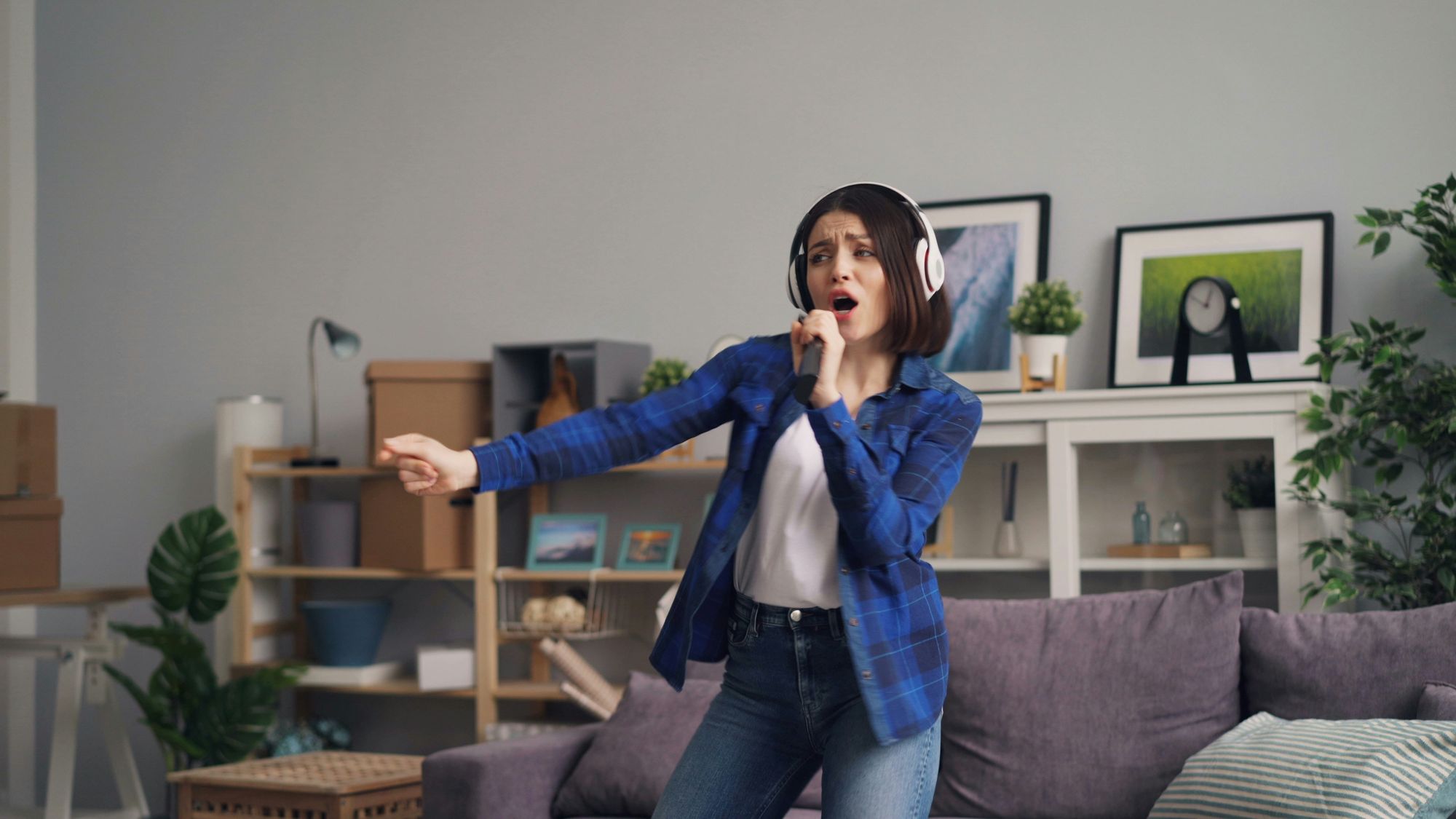
One of the easiest ways to enjoy karaoke in an apartment is by using headphones.
With a headphone karaoke setup, the backing track plays directly into your ears instead of through speakers. This dramatically reduces the amount of sound your neighbors hear.
A couple of ways to set this up with Singa:
- Wired or Bluetooth headphones straight from your phone or tablet. Open Singa, pick a song from the catalogue, and sing along with the lyrics on screen while the track plays privately through your headphones.
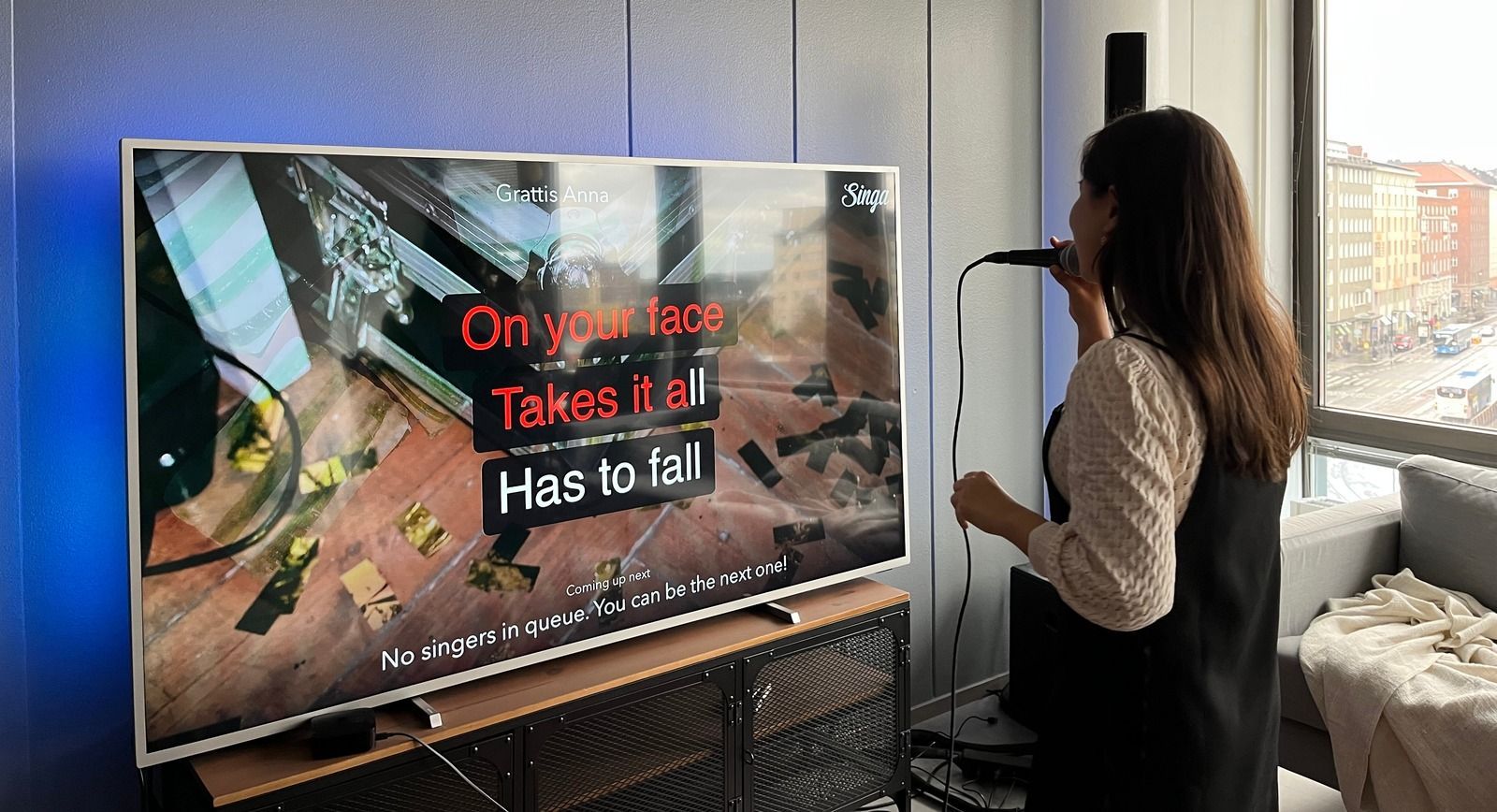
- AirPlay to your TV, headphones on the TV or soundbar. Cast Singa to a bigger screen for the full karaoke experience, then plug headphones into the TV or a Bluetooth-connected soundbar so the backing track stays private while you sing over it.
This setup works especially well late at night, in shared apartments with roommates on different schedules, or any time you want to practice a song without an audience.
Singa's guide vocals and transposition tools also mean you can adjust a song to sit comfortably in your range, so you're not tempted to push into a louder, more strained belt just to hit a high note.
If you’re practicing regularly, headphone karaoke is one of the most effective answers to how to do karaoke without being loud.
Give your neighbors a heads-up
A quick message to your neighbors can make a surprising difference.
Something as simple as: “We’re having a small karaoke night from 7 to 9 PM on Saturday. We’ll keep the volume reasonable, but let us know if it becomes disruptive.”
Many people appreciate the courtesy, especially when they know the noise has a clear end time.
Consider alternative locations for bigger karaoke sessions
Sometimes you simply want to sing loudly with friends. Instead of worrying about apartment walls, consider booking a karaoke room designed for private groups.
Private karaoke venues let everyone sing freely without disturbing neighbors, while still offering a more intimate experience than singing in front of an entire bar.
Keep the big, high-energy karaoke sessions for dedicated venues, and save your apartment for quieter singalongs.

Karaoke night, minus the noise complaints
Apartment living doesn't mean giving up karaoke. It just means being a little more intentional about your space, your timing, and your setup. Soften the room with rugs and soft furnishings, be mindful of quiet hours, and lean on headphone karaoke or private karaoke rooms when you want to go all out without a single complaint at the door.
With Singa's 140,000+ song catalogue, original artist recordings, and tools like guide vocals and transposition, you can build a full karaoke night at home that sounds great, fits your space, and keeps the peace with everyone next door.